Gentle parenting has become one of the most discussed parenting styles in recent years. Many modern families are choosing this method because it focuses on empathy, respect, emotional connection, and healthy communication. Instead of punishments and fear-based discipline, parents try to guide children through understanding and support. However, many people misunderstand the concept and end up making serious gentle parenting mistakes without realizing it.
One of the biggest reasons behind these mistakes is confusion between kindness and lack of discipline. Some parents believe that gentle parenting means never saying no or never correcting wrong actions. This creates major modern parenting issues, especially when children start showing difficult child behavior such as tantrums, disrespect, and emotional outbursts. Gentle parenting should include both warmth and firm boundaries.
Children need emotional safety, but they also need structure. When parents remove all rules in the name of softness, children may struggle with self-control and responsibility. These gentle parenting mistakes often lead to stress for both parents and children. Understanding where things go wrong helps families create a healthier balance.
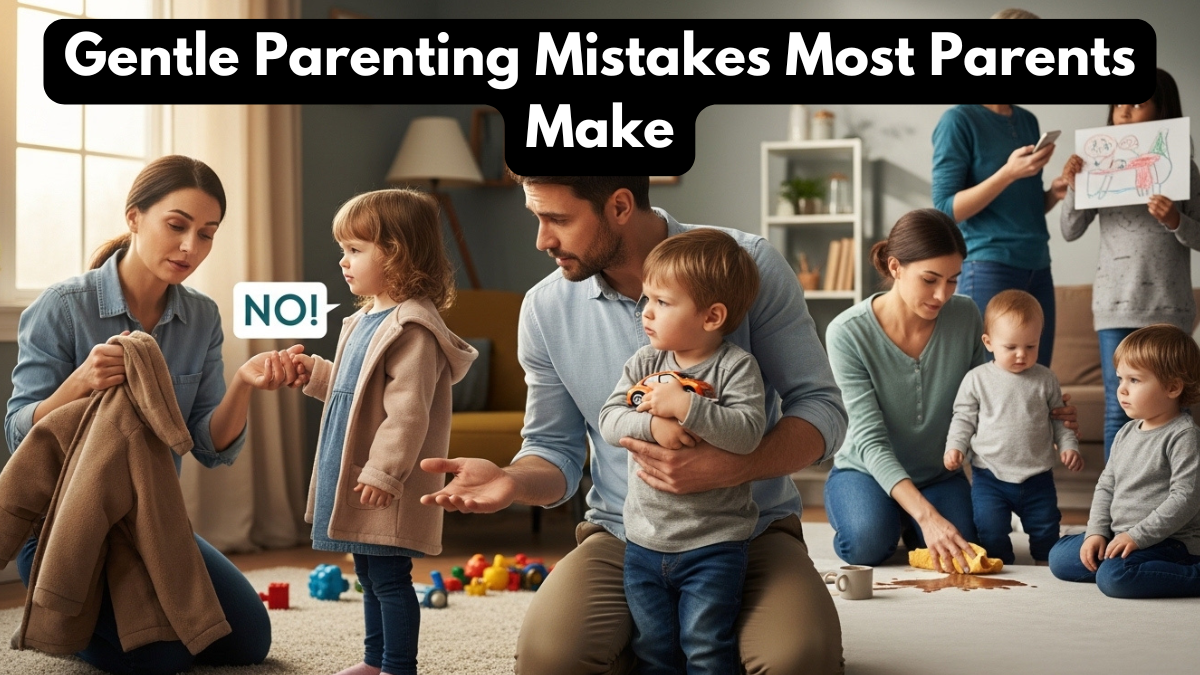
Common Gentle Parenting Mistakes Parents Often Make
One of the most common gentle parenting mistakes is allowing children too much control. Parents may avoid setting limits because they fear being too strict. But children feel safer when they know the boundaries clearly. Lack of structure often increases negative child behavior, not emotional security.
Another issue is inconsistency. Parents may set rules one day and ignore them the next. This sends mixed messages and confuses children. Consistency helps children understand expectations and consequences. Inconsistent parenting is one of the major modern parenting issues seen today.
Some parents also avoid consequences completely. Gentle parenting does not mean removing accountability. If a child behaves badly, natural and respectful consequences are still necessary. Without them, children may not learn responsibility, and poor child behavior may continue.
Over-explaining is another hidden problem. While communication is important, long emotional discussions during every small conflict can overwhelm younger children. Sometimes children simply need a clear instruction and calm guidance instead of constant negotiation.
Signs That Gentle Parenting Is Going in the Wrong Direction
Parents often notice problems when routines become difficult to manage. If a child refuses bedtime, ignores school responsibilities, or constantly challenges simple rules, it may be a sign that gentle parenting mistakes are affecting the home environment.
Emotional exhaustion is another major warning sign. Parents trying to stay endlessly calm may begin feeling guilty, tired, and frustrated. This happens because unrealistic expectations create pressure. Social media often makes gentle parenting look perfect, which increases modern parenting issues for parents trying to meet impossible standards.
When children struggle with respect, patience, or emotional regulation, parents should re-evaluate their parenting style. Healthy discipline is not harmful—it is necessary. Improving child behavior requires both emotional support and clear leadership from parents.
Children also test boundaries naturally as part of development. This does not mean parenting is failing, but it does mean boundaries must be strong and consistent. Recognizing these patterns early helps prevent bigger family conflicts later.
Comparison Table: Healthy Gentle Parenting vs Common Mistakes
| Healthy Gentle Parenting | Common Gentle Parenting Mistakes |
|---|---|
| Setting clear and calm boundaries | Allowing children to control everything |
| Using respectful consequences | Avoiding all consequences |
| Staying emotionally available | Ignoring discipline completely |
| Consistent rules and routines | Inconsistent parenting decisions |
| Teaching responsibility | Protecting children from every discomfort |
| Listening with empathy | Turning every correction into negotiation |
This table clearly shows that true gentle parenting is balanced. The goal is not unlimited freedom, but respectful leadership that improves child behavior and reduces long-term modern parenting issues.
How Parents Can Correct These Mistakes
The first step in fixing gentle parenting mistakes is understanding that boundaries are not harmful. Saying no respectfully teaches children emotional regulation and respect. Children benefit from predictable routines and clear expectations.
Parents should focus on consistency instead of perfection. No parent stays calm all the time, and that is normal. What matters most is repair, honesty, and learning from mistakes. Consistent communication helps improve trust and reduces negative child behavior.
Using natural consequences is also important. For example, if a child refuses homework, the consequence may be less free time later. This teaches accountability without fear. It solves many modern parenting issues while still respecting the child’s emotional needs.
Parents should also model emotional control. Children learn more from observation than instruction. Calm conflict resolution, respectful communication, and healthy emotional expression help children develop stronger behavior patterns over time.
Conclusion
Gentle parenting can be a powerful and positive parenting approach when practiced correctly. It builds trust, emotional awareness, and stronger family relationships. However, many parents make serious gentle parenting mistakes by removing discipline completely or confusing kindness with permission.
These mistakes often create larger modern parenting issues, including stress, emotional exhaustion, and difficult child behavior. Children need love and empathy, but they also need leadership, boundaries, and accountability to grow into responsible adults.
The best parenting style is not perfect softness or harsh discipline—it is balance. When parents combine emotional connection with clear expectations, children feel both safe and guided. Avoiding these gentle parenting mistakes helps create healthier homes and stronger parent-child relationships.
FAQs
Is gentle parenting the same as permissive parenting?
No, gentle parenting is not permissive parenting. Gentle parenting includes clear boundaries, respect, and accountability, while permissive parenting often removes rules completely.
Can gentle parenting cause bad child behavior?
Yes, if parents misunderstand it. Poorly applied gentle parenting can increase negative child behavior when children have no clear limits or consequences.
What are the biggest gentle parenting mistakes?
The biggest gentle parenting mistakes include lack of boundaries, inconsistency, avoiding consequences, and confusing empathy with unlimited freedom.
How can parents improve child behavior with gentle parenting?
Parents can improve child behavior by setting clear expectations, staying consistent, using respectful consequences, and maintaining emotional connection.
Why are modern parenting issues increasing today?
Many modern parenting issues come from unrealistic parenting expectations, social media pressure, and confusion about balancing discipline with emotional support.
Click here to learn more