Modern parenting styles have changed significantly, and one of the biggest shifts has been the rise of gentle parenting. Many parents now focus on calm communication, emotional awareness, and respectful discipline instead of punishment-based methods. While this approach brings many positive results, the gentle parenting burnout reality is becoming an important topic that more families are starting to discuss openly. Constant emotional regulation can become exhausting, especially when parents are already dealing with work pressure, household responsibilities, and personal stress.
The truth behind gentle parenting burnout reality is that trying to remain patient and emotionally available all the time can create serious parenting stress. Parents often feel pressure to respond perfectly in every difficult situation, whether it is tantrums, sibling fights, school pressure, or bedtime struggles. This form of emotional parenting requires deep self-control, and when there is no rest or support, burnout becomes very real.
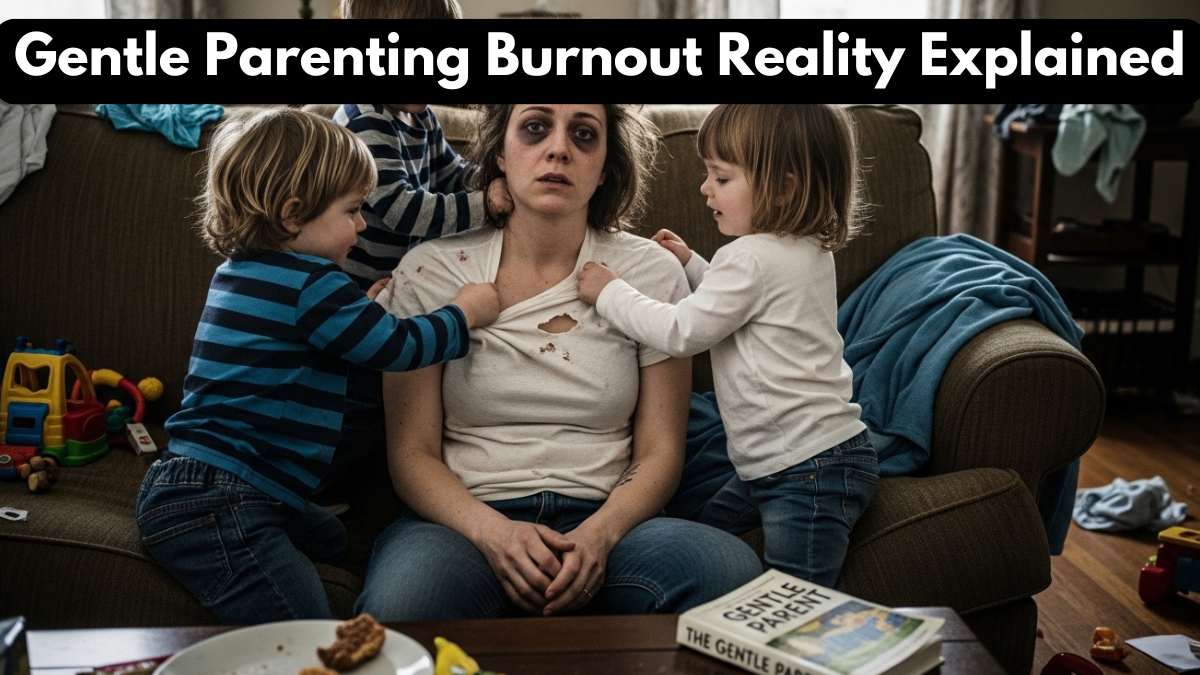
Understanding the Gentle Parenting Burnout Reality
The idea of gentle parenting burnout reality does not mean gentle parenting is wrong. Instead, it highlights how difficult it can be to practice consistently in real life. Social media often shows a perfect version of calm parenting, but daily life is far more complicated. Parents may feel guilt when they lose patience or fail to respond with ideal emotional balance.
This creates hidden parenting stress because parents begin judging themselves constantly. They may feel they are failing if they raise their voice, set strong boundaries, or simply feel overwhelmed. In reality, healthy emotional parenting also requires parents to protect their own mental health.
Common signs of gentle parenting burnout include:
- Feeling emotionally exhausted every day
- Constant guilt after small parenting mistakes
- Difficulty staying calm during repeated conflicts
- Mental fatigue from overthinking every response
- Feeling isolated without support
- Resentment caused by emotional overload
Recognizing the gentle parenting burnout reality is the first step toward building a healthier parenting balance.
Why Emotional Parenting Can Feel So Draining
One major reason behind gentle parenting burnout reality is that emotional parenting asks parents to manage both the child’s emotions and their own reactions at the same time. This is mentally demanding, especially during stressful routines like school mornings, mealtime battles, homework resistance, and bedtime conflicts.
Parents are expected to stay calm, explain feelings, validate emotions, and guide behavior without anger. While this is valuable, it also requires energy that many exhausted parents simply do not have every day. When combined with financial pressure, work responsibilities, and lack of sleep, the level of parenting stress becomes even higher.
Some major emotional drains include:
- Lack of personal recovery time
- Constant emotional decision-making
- Pressure to avoid traditional discipline methods
- Comparing parenting styles online
- Limited support from partners or family
- Fear of emotionally harming children
This is why the gentle parenting burnout reality deserves more honest conversations rather than unrealistic expectations.
Gentle Parenting vs Parenting Perfection
Many people confuse gentle parenting with parenting perfection. This misunderstanding increases parenting stress because parents believe they must never show frustration or make mistakes. In truth, healthy emotional parenting is about connection, repair, and consistency—not perfection.
Children do not need flawless parents. They need safe relationships where mistakes are acknowledged and repaired. Saying sorry, taking breaks, and setting boundaries are all part of healthy parenting. Ignoring personal needs only makes the gentle parenting burnout reality worse.
Here is a simple comparison:
| Parenting Myth | Healthy Reality |
|---|---|
| Good parents never get angry | Good parents repair after mistakes |
| Gentle parenting means no boundaries | Boundaries are essential for safety |
| Calm parenting must happen all the time | Calm parenting improves with practice |
| Emotional parenting means self-sacrifice | Parents also need emotional care |
| Perfect patience is required | Real parenting includes imperfect moments |
Understanding this difference helps reduce unnecessary guilt and makes emotional parenting more sustainable.
How Parents Can Reduce Parenting Stress
Managing the gentle parenting burnout reality starts with accepting that parents are human first. Emotional regulation is important, but so is rest, support, and realistic expectations. Parents need systems that protect their own well-being, not just parenting strategies for children.
Helpful ways to reduce parenting stress include:
- Taking short personal breaks without guilt
- Asking for help from partners or family
- Creating simple routines instead of perfect routines
- Limiting comparison with social media parenting content
- Practicing emotional repair instead of perfection
- Setting clear household boundaries
Strong emotional parenting becomes easier when parents are not operating in survival mode every day. Self-care is not selfish—it is part of effective parenting.
This is one of the most important lessons hidden inside the gentle parenting burnout reality discussion.
The Role of Support Systems in Emotional Parenting
No parenting method works well in complete isolation. One reason the gentle parenting burnout reality feels so heavy is because many parents are trying to do everything alone. Without emotional support, even the best parenting intentions become difficult to maintain.
Support systems can include partners, grandparents, close friends, parenting groups, therapists, or even workplace flexibility. Shared responsibility reduces both emotional and physical exhaustion. Better parenting stress management often depends more on support than on parenting knowledge alone.
When parents feel seen and supported, emotional parenting becomes more realistic and less overwhelming. This improves not only parent well-being but also the emotional environment children grow up in.
The goal should not be perfect parenting—it should be sustainable parenting.
Conclusion
The growing discussion around gentle parenting burnout reality shows that modern parenting needs more honesty and less perfection pressure. Gentle parenting offers valuable emotional connection, but it also creates serious parenting stress when parents feel responsible for staying calm and emotionally available at all times.
Healthy emotional parenting works best when parents are supported, rested, and allowed to be imperfect. Boundaries, repair, self-care, and realistic expectations are just as important as patience and empathy. Understanding the real gentle parenting burnout reality helps families create parenting approaches that are not only kind to children, but also kind to parents.
FAQs
What is gentle parenting burnout reality?
It refers to the emotional exhaustion parents feel when trying to constantly stay calm, patient, and emotionally available while managing daily parenting responsibilities.
Does gentle parenting cause parenting stress?
Gentle parenting itself is not the problem, but unrealistic expectations and lack of support can create major parenting stress and emotional exhaustion.
What is emotional parenting?
Emotional parenting focuses on understanding children’s feelings, respectful communication, and emotional regulation instead of punishment-based discipline methods.
Can parents still be strict while using gentle parenting?
Yes, healthy emotional parenting includes strong boundaries and structure. Gentle parenting does not mean allowing everything without rules.
How can parents reduce gentle parenting burnout?
Reducing burnout requires rest, support systems, realistic expectations, emotional repair after mistakes, and accepting that perfect parenting is not possible.
Click here to learn more